Understanding the difference in dermaplaning razor vs professional dermaplaning comes down to who is holding the blade, what tool they are using, and how deeply the skin is actually being treated. Both approaches remove dead surface skin and the fine vellus hair often called peach fuzz, but they are not the same experience, and the results and risks vary more than most people expect. This guide walks through both options honestly so you can decide which one suits your skin and your budget.
Key Takeaways
- An at-home dermaplaning razor uses a lighter, safer blade for gentle surface exfoliation; in-office dermaplaning uses a sterile surgical-grade scalpel for a deeper, more precise result.
- Professional dermaplaning typically runs $75-$200 standalone, or $25-$75 as a facial add-on; a home dermaplaning tool costs a fraction of that but delivers less dramatic results.
- Neither is a medical treatment for acne, deep lines, or scarring; consult a licensed provider about your specific skin before booking.
What each method actually does
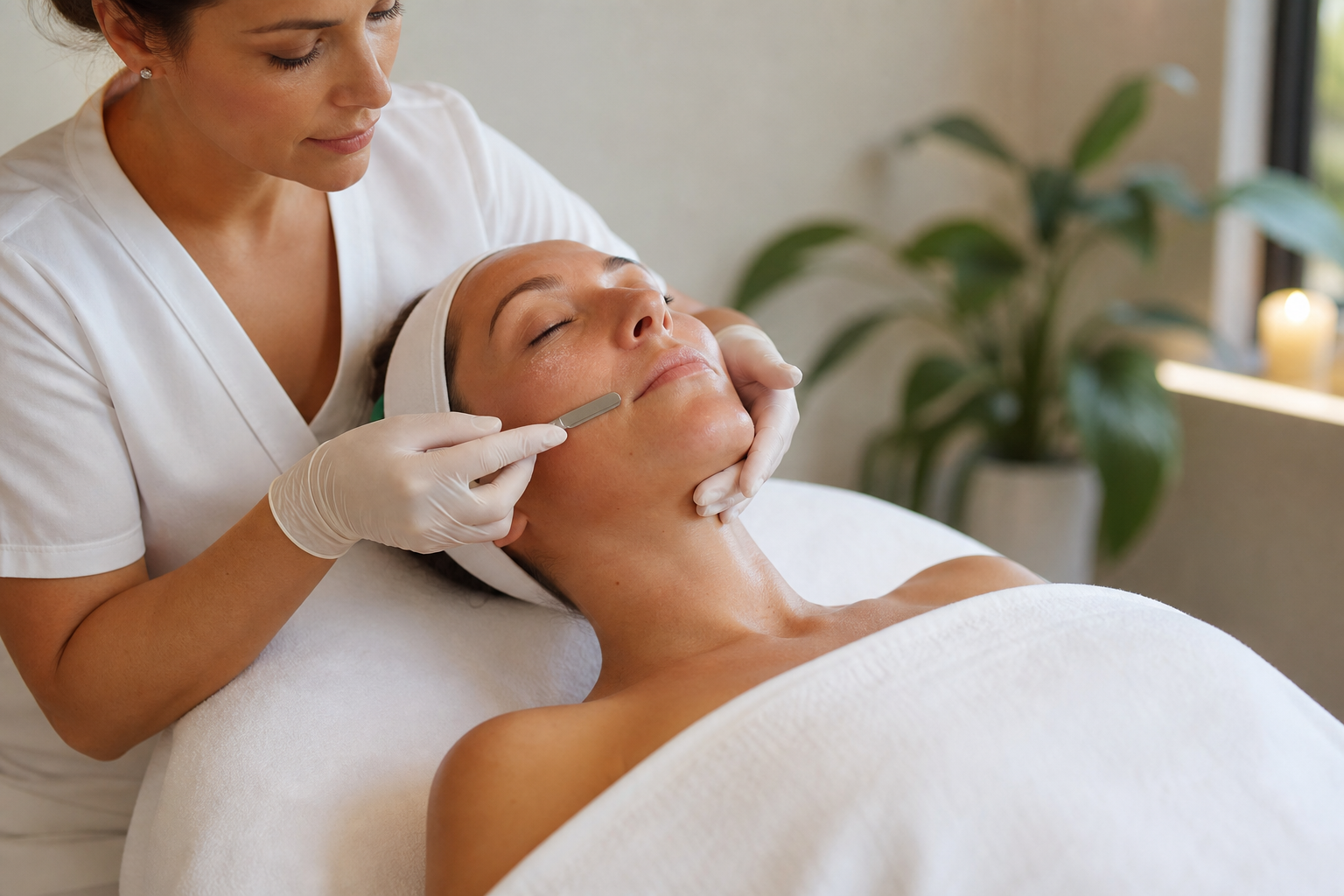
Dermaplaning is a form of mechanical exfoliation. A blade is drawn across taut skin at a shallow angle to lift away the top layer of dead cells (the stratum corneum) along with vellus hair. The goal is smoother texture, brighter tone, and better product and makeup application.
The core question in dermaplaning razor vs professional dermaplaning is control and depth. A trained esthetician working in a clean, controlled setting can treat closer to the skin and cover the full face evenly. A home user with a razor works more conservatively, which is exactly the point of the consumer tools.
The dermaplaning razor at home
A dermaplaning razor sold for home use is small, lightweight, and often has a guard or a slightly dulled edge to reduce nicks. These razors for dermaplaning are marketed as a quick way to remove peach fuzz and smooth the skin before makeup. Used a couple of times a month on clean, dry skin, a home dermaplaning tool can give a subtle glow.
Realistic expectations for dermaplaning with a razor at home:
- Light surface exfoliation and hair removal, not a deep resurfacing.
- Higher risk of uneven pressure, missed spots, or small nicks along the jaw and upper lip.
- No professional skin assessment, so active acne, irritation, or broken skin can be aggravated.
In-office professional dermaplaning
A licensed esthetician uses a sterile, single-use surgical blade and works section by section while stabilizing the skin. The treatment is usually paired with a cleanse, sometimes a peel or enzyme mask, and a finishing SPF. Because the technique is more precise and the blade sharper, the exfoliation is more thorough and the results tend to look more polished and even.
Dermaplaning razor vs professional dermaplaning: results and downtime
For most people, the difference is one of degree. A home dermaplaning razor produces a modest, short-lived smoothness. Professional dermaplaning tends to leave skin noticeably brighter and softer for one to three weeks, since more dead cell buildup is removed in a single, even pass.
Downtime is minimal for both. Expect possible mild redness for a few hours. Some people notice slight sensitivity or dryness for a day or two, especially after a professional session combined with a peel. There is no visible peeling or recovery period the way there is with stronger resurfacing treatments.
A common myth: dermaplaning does not make hair grow back thicker or darker. Vellus hair returns at the same texture it was before. It simply feels different for a short window as it grows out.
Who each option suits, and who should skip it
Dermaplaning of any kind tends to suit people with dull texture, dry or flaky skin, fine surface lines, and those who want smoother makeup application. It is popular before events for exactly this reason.
Consider avoiding dermaplaning, at home or in-office, if you have:
- Active, inflamed acne or pustules (the blade can spread bacteria and irritate lesions).
- Cystic acne, eczema, rosacea flares, or sunburn.
- A tendency toward keloid scarring or very sensitive, reactive skin.
If breakouts are your main concern, a targeted approach such as a professional Acne Treatment is usually a better starting point than dermaplaning. When in doubt, a provider consultation is the right first step.
Dermaplaning razor vs professional dermaplaning: what it costs and why
Across the New England and MetroWest Boston market, professional dermaplaning typically runs about $75-$200 as a standalone service, or $25-$75 when added to another facial. Marlborough sits in a middle-to-upper price band because of its proximity to Boston.
Price varies for a few honest reasons:
- Provider experience: a seasoned esthetician who dermaplanes daily commands more than a newer one.
- What is included: a standalone quick treatment costs less than one bundled with a peel, mask, or LED.
- Setting: medical spas and dermatology offices tend to price at the higher end.
Compared to a $15-$40 home dermaplaning razor kit, the in-office option is clearly more expensive per session. When you weigh dermaplaning razor vs professional dermaplaning purely on price, the home tool wins, but the value trade-off is precision, sterility, expert assessment, and a more visible result.
How dermaplaning fits alongside other treatments
Dermaplaning is often a gateway service that people combine with facials over time. Many spas pair it with a Custom Facial so the freshly exfoliated skin can absorb serums more effectively.
It also raises the question of when to reach for something stronger. If your goals include firmer skin, softer deep lines, or scar and pore refinement, treatments like microneedling come up frequently. A quick primer:
What is microneedling, briefly
Microneedling uses fine needles to create controlled micro-injuries that prompt the skin to rebuild collagen. Unlike dermaplaning, which works only on the surface, microneedling reaches deeper to address texture, fine lines, and some scarring.
- How long results last: collagen changes build over weeks; results from a series often last several months to a year, with maintenance sessions.
- When skin looks best: often around four to six weeks after a session, once collagen remodeling progresses. Two days after, skin may look pink, slightly swollen, or feel tight like a mild sunburn.
- Downsides: redness and flaking for a few days, temporary sensitivity, and the need for a series (usually three to four sessions) to see meaningful change.
- Is 40 too old: no. Many candidates are in their 40s, 50s, and beyond, since collagen naturally declines with age.
- Is it worth it: for texture, scarring, and firmness goals it can be, but results build gradually rather than overnight. A provider can tell you if you are a good candidate.
None of this is medical advice or a promise of results. It is context so you understand where gentle dermaplaning ends and deeper treatments begin, and how the dermaplaning razor vs professional dermaplaning choice fits into a broader skincare plan.
Choosing a qualified provider in Marlborough
If you decide the professional route is right for you, look for a licensed esthetician, sterile single-use blades, a proper pre-treatment skin assessment, and clear aftercare guidance. Reading recent reviews and photos, and searching for the best facial near me or a trusted beauty esthetician near me in the MetroWest area, helps you compare aesthetic treatments in Marlborough MA on more than price.
Gaya Beauty & Spa in Marlborough is one local option to consider. With the tagline "Best Facial in Marlborough Ma," the spa positions itself as a calm MetroWest escape where modern skincare meets mindful self-care. Its menu includes standalone Dermaplaning as well as facials, Hydrafacial, microneedling, and anti-aging services, so you can start gentle and build a plan over time with a professional's input.

Ready to experience Gaya Beauty & Spa in Marlborough?
Book a Visit at Gaya Beauty & SpaNext Steps
The dermaplaning razor vs professional dermaplaning decision really depends on your goals. If you want a quick, low-cost refresh at home, a gentle dermaplaning razor used a couple of times a month on clean skin is a reasonable choice, provided your skin is clear and not irritated. If you want an even, longer-lasting result, or you are new to the treatment, book a professional session and let a licensed esthetician assess your skin first.
Practical to-do list: patch-test any new home dermaplaning tool, always finish with SPF, avoid dermaplaning over active breakouts, and space professional sessions about three to four weeks apart. For anything beyond surface smoothing, ask a licensed provider whether a facial series or a deeper treatment suits your specific skin goals.